
Feeding
How Much Should You Feed Your Dog?
The bag has a chart, but your dog isn’t a chart. Here’s a simple way to find the right amount of food, and where treats fit in
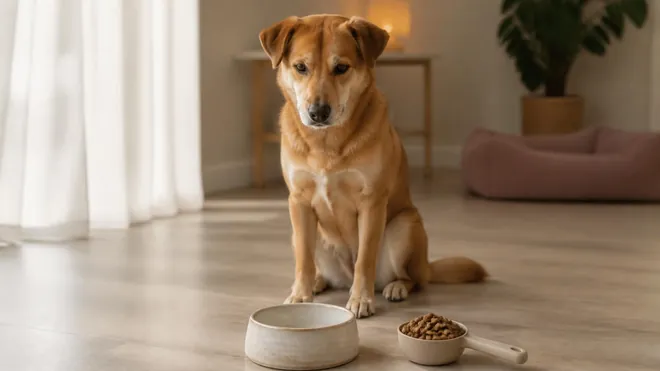
It’s one of the most common questions dog owners have, and one of the hardest to answer from the outside. Two dogs of the same weight can need noticeably different amounts of food, depending on their age, how active they are and even the food itself.
Here’s the direct answer: start with the feeding guide on your dog’s food, then adjust based on your dog’s activity and body shape, and check in with your vet to confirm you’re on track. That’s it. The rest of this post is just how to do each step well.
Start with the feeding guide. Every complete dog food has a feeding chart on the bag or can, usually based on your dog’s weight. Treat that number as a starting point, not a rule. Foods vary a lot in how filling they are, so a cup of one brand isn’t the same as a cup of another. Measure with an actual measuring cup or a kitchen scale rather than eyeballing a scoop, and split the daily amount across the number of meals you feed.
Adjust for your dog’s life. The chart can’t know your dog. A young, busy dog who hikes on weekends may need more than the label suggests. A laid-back couch companion or an older dog who naps most of the afternoon may need less. Seasons matter too, since many dogs are more active in cool weather than in the heat of summer. If you change your dog’s routine in a big way, their food needs may change with it.
Watch the body, not just the bowl. A simple at-home check can tell you a lot. Run your hands along your dog’s sides. You should be able to feel the ribs without pressing hard, and from above, most dogs have a visible waist behind the ribs. From the side, the belly usually tucks up a little rather than hanging straight down. If you’re unsure what a healthy shape looks like for your breed, your vet can show you. Check every few weeks, and if things are drifting one way or the other, adjust portions gradually rather than all at once.
Ask your vet. Your vet is the best person to tell you what a healthy weight looks like for your dog and roughly how much to feed. That’s especially true for puppies, seniors, dogs on a special diet, and any dog whose weight has changed without an obvious reason. Bring the food bag or a photo of the label to your next visit so you can go over the numbers together.
Count treats as part of the day. Treats add up faster than most of us realize. Many vets suggest keeping treats to around 10 percent of your dog’s daily calories, with the rest coming from their regular food. A few easy habits help:
- Use small pieces. Most dogs care more about getting a treat than about its size.
- Set aside the day’s treats in the morning so you can see what’s been given.
- Remember that table scraps and chews count too.
- If you share people food, keep it plain and small. Here’s a list of easy ones.
If your dog is a fussy eater rather than an eager one, our tips for feeding a picky dog may help too.
The short version. Start with the label, adjust for activity and body shape, check with your vet, and keep treats to a small slice of the day. When you’re choosing those treats, it helps to pick ones with ingredients you can read at a glance. The Treat Match Quiz takes about a minute and can point you to a good fit.
Keep reading
Feeding a Picky Dog
Some dogs inhale dinner. Others sniff it and walk away. Here are simple, practical ways to make mealtime easier with a choosy eater.
Flavored Yak Cheese Chews: All Seven of Ours, Compared
Blueberry, coconut, mango, mint, pumpkin, strawberry and the original. What’s in each one, how they differ, and how to pick a flavor.
Not sure where to start? The Treat Match Quiz narrows it down in about a minute.
Take the quiz All posts